

You launched the website. The design looks sharp, the product works, everything's live, and then… nothing. Days pass. The traffic graph sits flat like a heartbeat monitor in a hospital drama. No calls, no sign-ups, no sales. Meanwhile a competitor with an uglier site and a worse product is sitting at the top of Google, quietly collecting the customers that should have been yours.
That gap, between building something good and being found by the people who need it, is the exact problem SEO solves.
If you've ever typed "what is SEO" into Google and come away more confused than when you started, this guide fixes that. We're going to cover what SEO actually means, how search engines decide who ranks, how the game has shifted with AI Overviews and generative search in 2026, and what you can genuinely do about it. No jargon walls, no fluff.
Let's get into it.
What Is SEO? (Search Engine Optimization Meaning)
SEO stands for Search Engine Optimization. That's the full form, and that's the whole acronym demystified, "S-E-O," nothing more exotic hiding behind it.
In plain English, SEO is the practice of improving your website so that search engines like Google and Bing show it higher in their unpaid (organic) results when people search for what you offer.
Here's the simple-words version: when someone searches "best running shoes for flat feet" or "software development company UK," there are millions of pages that could answer them. SEO is the work you do to make sure your page is the one the search engine decides to show, ideally near the top, where almost all the clicks happen.
The "optimization" part trips people up, so let's define it. To optimize means to make your site easier for search engines to find, understand, and trust, and easier for humans to actually use once they arrive. Those two goals are not in conflict. In fact, modern SEO works precisely because Google has spent two decades teaching its systems to reward pages that genuinely help people.
So when you see the term search engine optimization meaning searched a thousand different ways, the answer underneath all of them is the same:
SEO is how you earn free, qualified, repeatable traffic from search engines by deserving it.
That word deserving is doing a lot of heavy lifting, and we'll keep coming back to it.
What Is SEO in Digital Marketing?
Within the wider world of digital marketing, SEO is the channel responsible for organic search visibility, the traffic you don't pay for per click.
Most marketing channels stop the moment you stop spending. Turn off your ads, and the visitors vanish that afternoon. SEO behaves differently. The meaning of SEO in digital marketing is essentially compounding interest for your website: the content and authority you build keeps working for months and years after it's published.
That's why founders, marketers, and business owners treat SEO as infrastructure rather than a campaign. A paid ad is a tap, on while you pay, off when you don't. SEO is a well, harder to dig, but it keeps giving water long after the digging stops.
For a business, the meaning of SEO is straightforward: more of the right people finding you at the exact moment they're looking to buy, hire, or learn, without you renting that attention every single time.
How Does SEO Work?
To understand SEO meaning and how it works, you have to understand what a search engine is actually doing behind that simple search box. It runs through four stages, and your job in SEO is to make each one go smoothly.
Crawling: How Search Engines Find Your Pages
Search engines send out automated programs, crawlers (Google's is called Googlebot), to discover pages across the web. They follow links from page to page, like someone exploring a city by walking down every street that connects to the one they're on.
If no link points to your page, and it's not listed in your XML sitemap, crawlers may never find it. Your robots.txt file can also accidentally block them. A page that can't be crawled simply doesn't exist as far as search is concerned.
Rendering: How Search Engines Read Your Code
Modern sites are built with HTML, CSS, and a lot of JavaScript. Before a search engine can judge your content, it has to render the page, run that code and see the finished result, the way a browser does for a human.
This is where a lot of fast-launched sites quietly fail. If your content only appears after heavy JavaScript loads, or your site is slow and bloated, the search engine may render an incomplete version and grade you on it. How your site is engineered directly affects what Google sees.
Indexing: How Search Engines Store and Understand You
Once rendered, the page gets analyzed and stored in the index, Google's enormous library of the web. During indexing, the engine works out what your page is about using natural language processing systems like BERT and MUM, and connects your content to real-world concepts in its Knowledge Graph.
This is why "entities" matter. Google doesn't just match keywords anymore; it tries to understand that a "jaguar" can be a car, an animal, or a sports team, and which one your page means.
Ranking: How Search Engines Order Results
Finally, when someone searches, Google's ranking systems, including machine-learning components like RankBrain, sort the indexed pages and decide the order. They weigh hundreds of signals: relevance to the query, content quality, backlinks, page experience, freshness, and how well you match the searcher's actual intent.
Crawl → Render → Index → Rank. Every SEO tactic you'll ever read about is just an attempt to win at one of those four steps.
The Three Pillars: Types of SEO
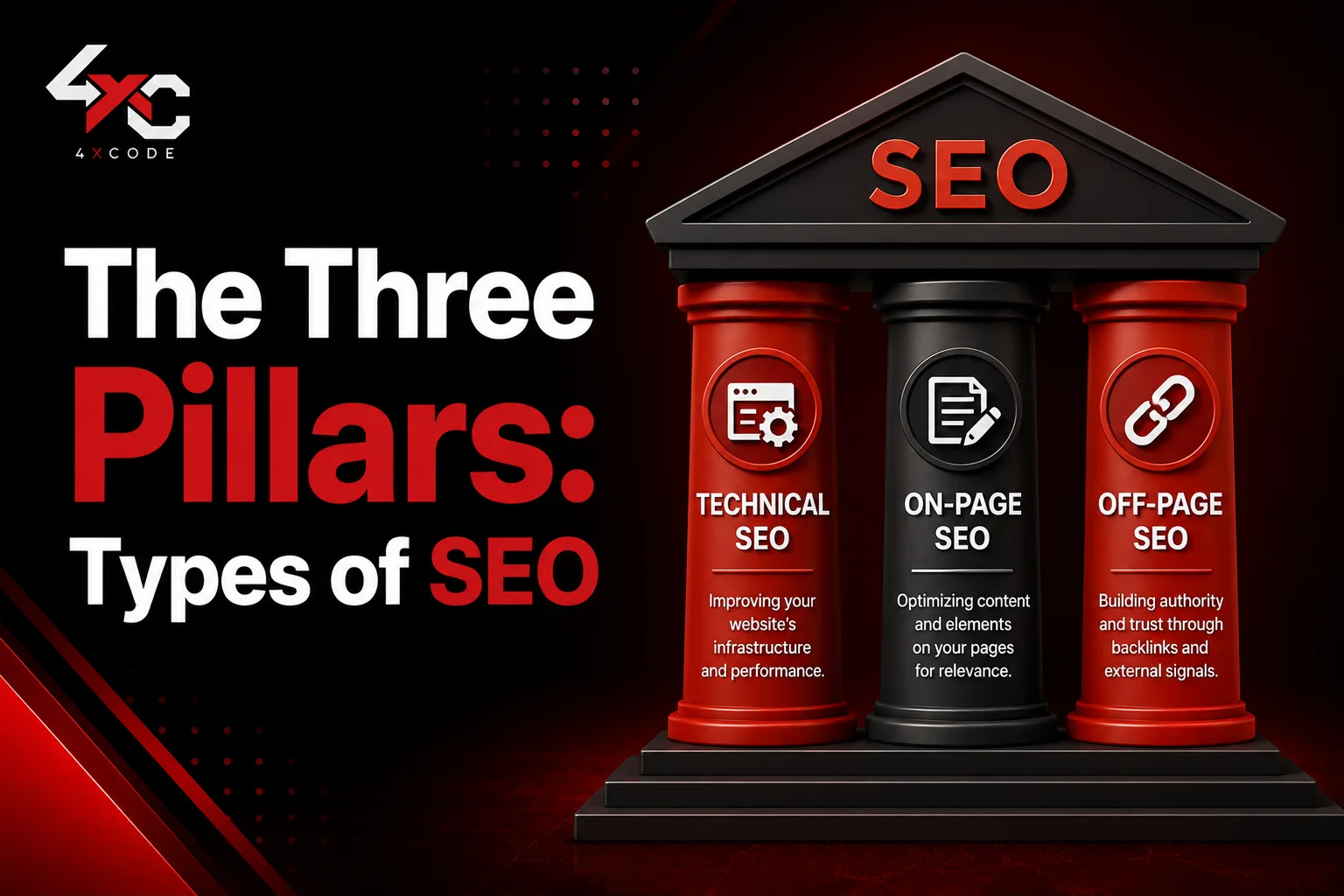
People love to overcomplicate SEO. In reality, almost everything fits into three buckets. Think of them as three legs of a stool, weak on any one and the whole thing wobbles.
On-Page SEO (Content Optimization)
On-page SEO is everything you control on the page itself to make it relevant and useful:
- Content quality and depth: answering the question fully, not thinly. This is the single biggest lever most people ignore.
- Meta title and meta description: the headline and summary that appear in search results and decide whether anyone clicks.
- Header tags (H1, H2, H3): the structure that helps both readers and search engines follow your logic.
- Keyword and search-intent alignment: using the words your audience actually searches, in a way that reads naturally.
- Internal linking: connecting related pages so authority and context flow through your site.
Get on-page right and you've told the search engine, clearly and honestly, what each page deserves to rank for.
Off-Page SEO (Authority Building)
Off-page SEO is everything that happens away from your site that builds your reputation, and it mostly comes down to backlinks: links from other websites pointing to yours.
Google treats a link a bit like a vote of confidence. A link from a respected, relevant site (think a national publication or an industry authority) carries real weight. A hundred links from spammy, irrelevant directories carry almost none, and can actively hurt you.
Off-page work also includes brand mentions, digital PR, and reviews, all the signals that tell search engines other people trust this business. You can't fully control it, and that's exactly why it's persuasive.
Technical SEO (The Foundation)
Technical SEO makes sure search engines can crawl, render, and index your site without friction. It's the plumbing. Nobody admires it when it works, and everything floods when it doesn't.
It covers Core Web Vitals (Google's measures of loading, interactivity, and visual stability), site speed, mobile-friendliness, HTTPS security, clean URL structure, canonical tags to prevent duplicate-content confusion, structured data (schema markup / JSON-LD) that helps you earn rich results, and a logical site architecture.
Here's the uncomfortable truth most guides skip: you can write the best content in the world, but if the site it lives on is slow, broken, or impossible to crawl, it will never rank to its potential. Technical SEO is where a strong website build pays off, and where a rushed one quietly costs you for years.
Beyond these three pillars, you'll also hear about local SEO (ranking in map results and "near me" searches), ecommerce SEO (optimizing product and category pages), and enterprise SEO (managing search at the scale of thousands of pages). They're specialisms, but they all stand on the same three pillars above.
SEO Ranking Factors That Actually Matter
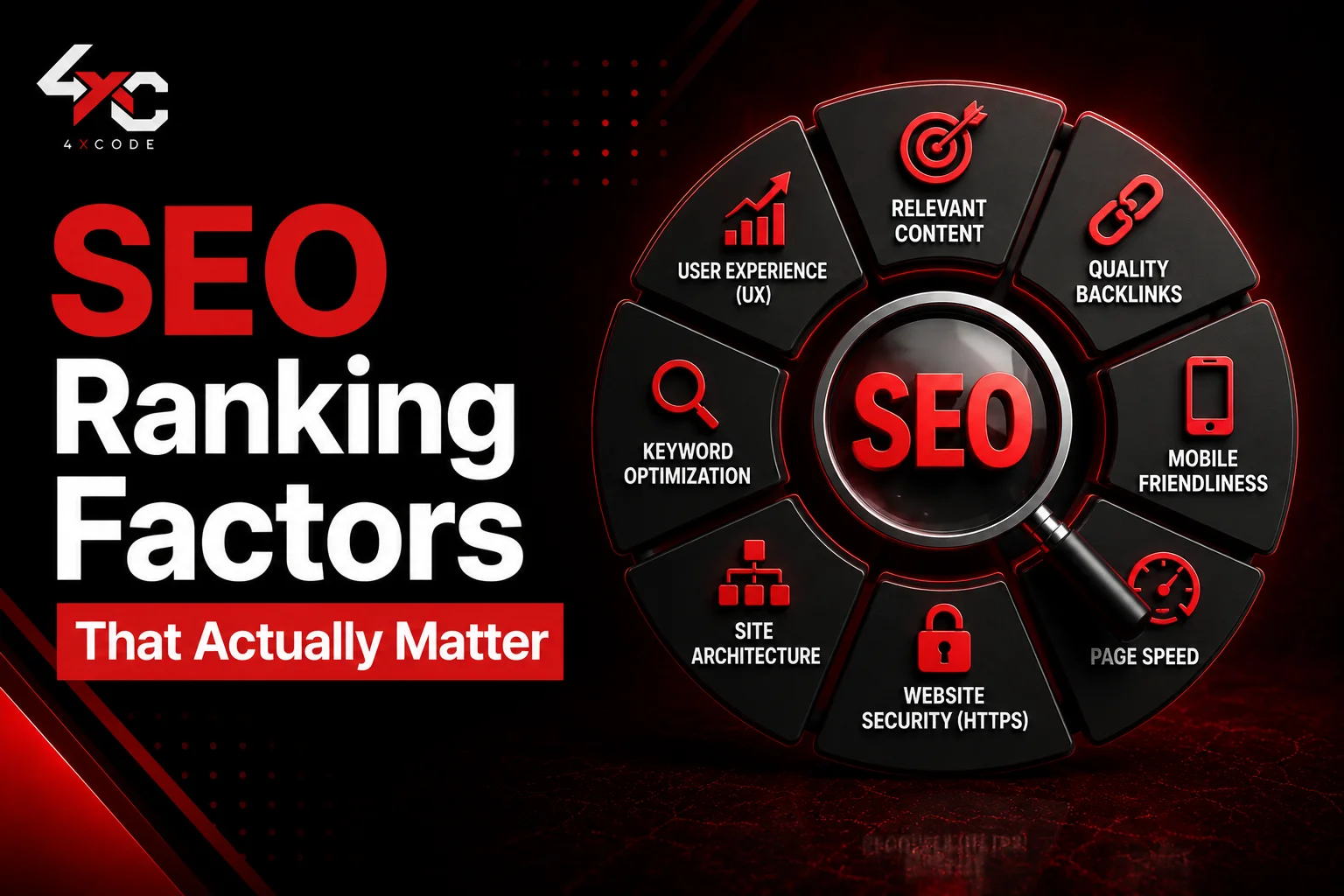
There's no public list of Google's exact algorithm, and anyone who claims one is selling something. But after years of watching what moves the needle, the factors that consistently matter cluster into a handful of areas:
- Relevance to search intent – does your page answer the actual question behind the query?
- Content quality and helpfulness – aligned with Google's Helpful Content System, which rewards people-first content and demotes thin, made-for-search filler.
- E-E-A-T Experience, Expertise, Authoritativeness, and Trustworthiness (more on this shortly).
- Backlinks and authority – quality and relevance over raw quantity, every time.
- Page experience – Core Web Vitals, mobile usability, HTTPS, no intrusive pop-ups.
- Freshness – for topics that change, up-to-date content wins.
Notice what isn't on that list: keyword density tricks, hidden text, exact-match domains, or buying a thousand cheap links. Those tactics are relics. The modern algorithm is built to see through them.
Search Intent: The Concept That Changes Everything
If you remember one idea from this entire guide, make it this one. Search intent is the real reason behind a search, and matching it is the difference between ranking and not.
Four searches, four completely different needs:
- "what is SEO": informational. The person wants to learn. (That's this page.)
- "SEO audit tool": commercial investigation. They're comparing options.
- "hire SEO consultant": transactional. They're ready to act.
- "Ahrefs login": navigational. They want a specific site.
Publish a hard-sell services page for an informational query and you'll lose, because Google can see that searchers wanted to learn, not buy. Before you write a single word, ask what the searcher actually wants, then become the best possible answer to that exact need.
How to Build an SEO Strategy (Step by Step)
SEO isn't a one-time fix you apply and forget. It's a cycle. Here's the workflow we use when we build search-ready platforms, and the same loop works whether you're a solo founder or a scaling brand.
- Research. Start with keyword research and audience understanding. What are people actually searching? What's the intent? What do the current top-ranking pages get right and, more usefully, what do they all miss?
- Plan. Map your findings into a content structure, topic clusters around pillar pages like this one, so you build topical authority rather than scattered, disconnected posts.
- Create and implement. Produce genuinely useful content and ship the on-page and technical work: clean structure, fast load, structured data, internal links.
- Monitor and maintain. Use Google Search Console to track impressions, clicks, and indexing issues. Fix crawl errors. Refresh decaying pages before they slide.
- Analyze and report. Measure what's working, double down, and prune what isn't. SEO rewards the teams that iterate.
SEO is ongoing, not a launch-day checkbox. Search results shift, competitors publish, and Google updates its systems constantly. The brands that win treat it as a habit, not a project.
How Long Until SEO Works?
Honest answer: typically three to six months to see meaningful movement, and six to twelve for competitive terms. Anyone promising page-one rankings in two weeks is either misleading you or planning something that'll get you penalized. SEO is a compounding asset, slow to start, hard to stop once it's rolling.
SEO vs. SEM vs. PPC: What's the Difference?
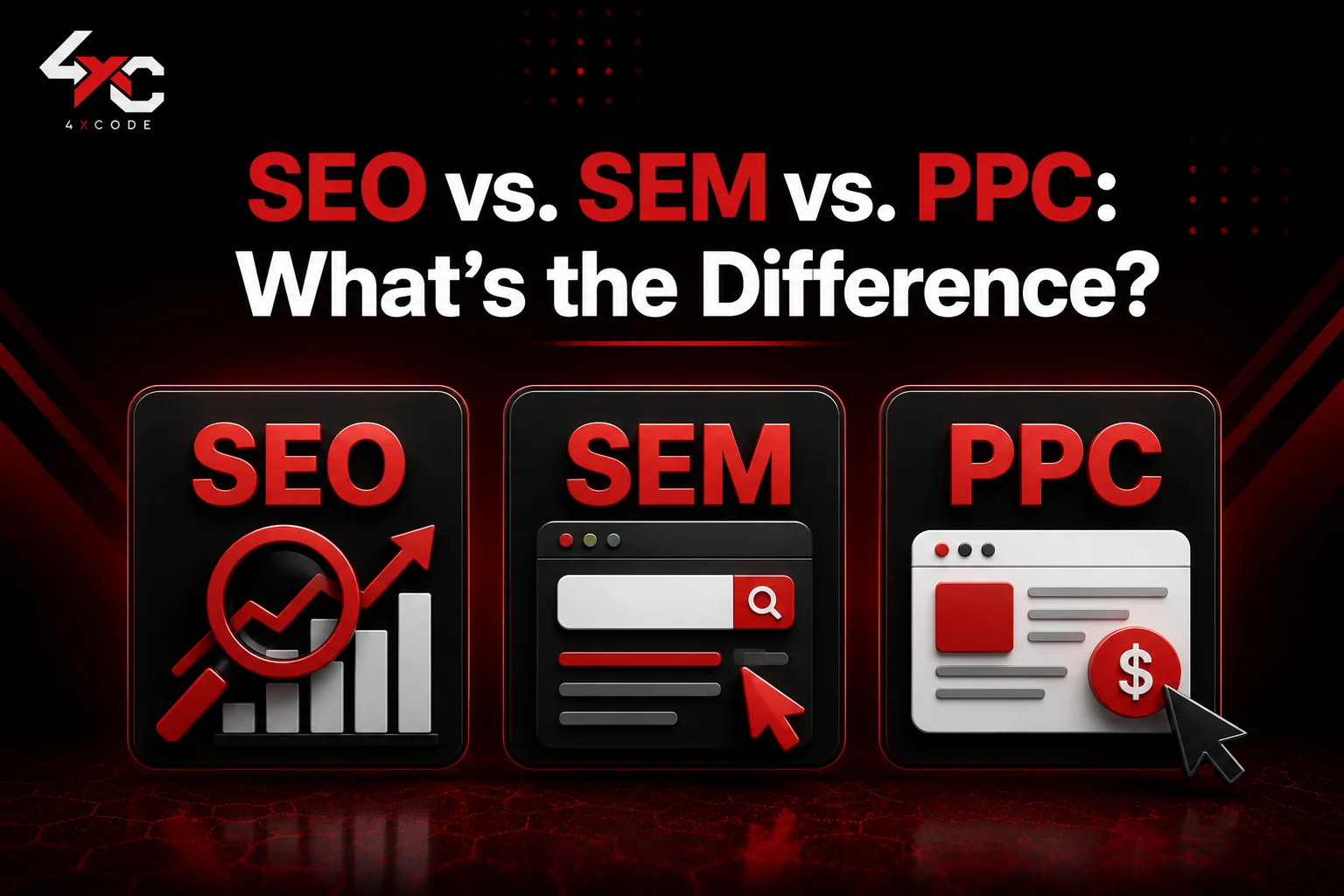
These terms get tangled constantly, so here's the clean version.
SEO | PPC | SEM | |
| What it is | Organic (unpaid) search rankings | Paid ads, you pay per click | The umbrella term covering both SEO + PPC |
| Cost model | Investment in content & site quality | Ongoing ad spend | Both |
| Speed | Slower to build, lasting | Instant visibility | Mixed |
| Longevity | Compounds over time | Stops when budget stops | Mixed |
| Best for | Long-term, sustainable growth | Immediate traffic, promotions, testing | A full search presence |
SEO vs. SEM: SEM (Search Engine Marketing) is the parent category; it includes both organic SEO and paid search. SEO is one part of SEM.
SEO vs. PPC: PPC (pay-per-click) buys you the top of the page instantly but only while you're paying. SEO earns a spot that keeps working after the work is done.
The smartest approach for most growing businesses isn't either/or, it's PPC for immediate traction while SEO compounds underneath it.
How Is SEO Different From AI Search and GEO?
This is where 2026 changes the game, and where most older guides fall silent.
Search no longer means just a list of blue links. Google's AI Overviews now answer many queries directly at the top of the page, and millions of people start their research inside generative tools instead of a traditional search bar. This has created a sister discipline: Generative Engine Optimization (GEO), optimizing to be cited and recommended by AI-powered answer systems, not just ranked in classic results.
So what actually changes for you?
- Entities over keywords. Entity-first SEO matters more than ever. These systems want to understand who you are as a recognized entity, your brand, your people, your area of expertise, and connect you confidently in the Knowledge Graph.
- Being the cited source. The goal shifts from "rank #1" to "be the trusted source the AI quotes." That means clear, well-structured, factually solid content with strong structured data.
- Brand authority compounds. When answer engines repeatedly see your brand associated with a topic across the web, you become a default recommendation. That's why off-page reputation and consistent expertise pay off twice now.
Here's the reassuring part: the fundamentals haven't been replaced, they've been raised. Helpful, well-structured, technically sound, genuinely authoritative content is exactly what both classic ranking and generative engines reward. Do real SEO well and you're already most of the way to GEO.
Why Is SEO Important?
So what is SEO used for, and why is it worth the effort? Because it's one of the few marketing investments that gets cheaper and stronger over time. The advantages stack up:
- Qualified, high-intent traffic. People searching are actively looking, not passively scrolling. Intent is built in.
- Cost efficiency. You're not paying per click. Done right, your cost-per-acquisition drops as organic traffic grows.
- Credibility and trust. Ranking organically reads as an endorsement. Users trust earned positions more than ads.
- Compounding returns. A great page can drive traffic, and revenue, for years.
- Resilience. When ad costs spike or budgets tighten, your organic channel keeps delivering.
For most businesses, SEO is the difference between renting attention forever and owning a growing asset. That's why it's important, and why it almost always belongs in the strategy.
SEO Starts With How Your Website Is Built
Here's something we see constantly at 4xcode: a business invests in content and link-building, then watches it underperform, because the site underneath it was never engineered to rank.
Slow load times tank Core Web Vitals. JavaScript that doesn't render cleanly hides content from crawlers. Messy URL structures and missing schema confuse search engines. No amount of great writing fully recovers from a shaky technical foundation.
We're a software and web engineering studio, not an SEO agency, and that's exactly the point: technical SEO is an engineering discipline. When we build a platform, search-readiness is baked into the architecture, not bolted on later:
- Blisteringly fast, edge-first web platforms that pass Core Web Vitals by default.
- Clean rendering and crawlable structure, so Google sees your full content, not a half-loaded shell.
- Structured data and semantic markup built into the code, helping you earn rich results and AI citations.
- Scalable SaaS and AI-powered products engineered to perform as you grow.
We've rebuilt platforms for real businesses, from a UK automotive specialist moving off manual operations to a fully digital system, to SaaS founders shipping in weeks. You can see that work in our case studies. The common thread: a fast, clean, well-engineered foundation that gives every other SEO effort room to actually win.
If your content is good but your rankings aren't, the problem often isn't the content. It's the build.
How to Learn SEO and Build Your Skills
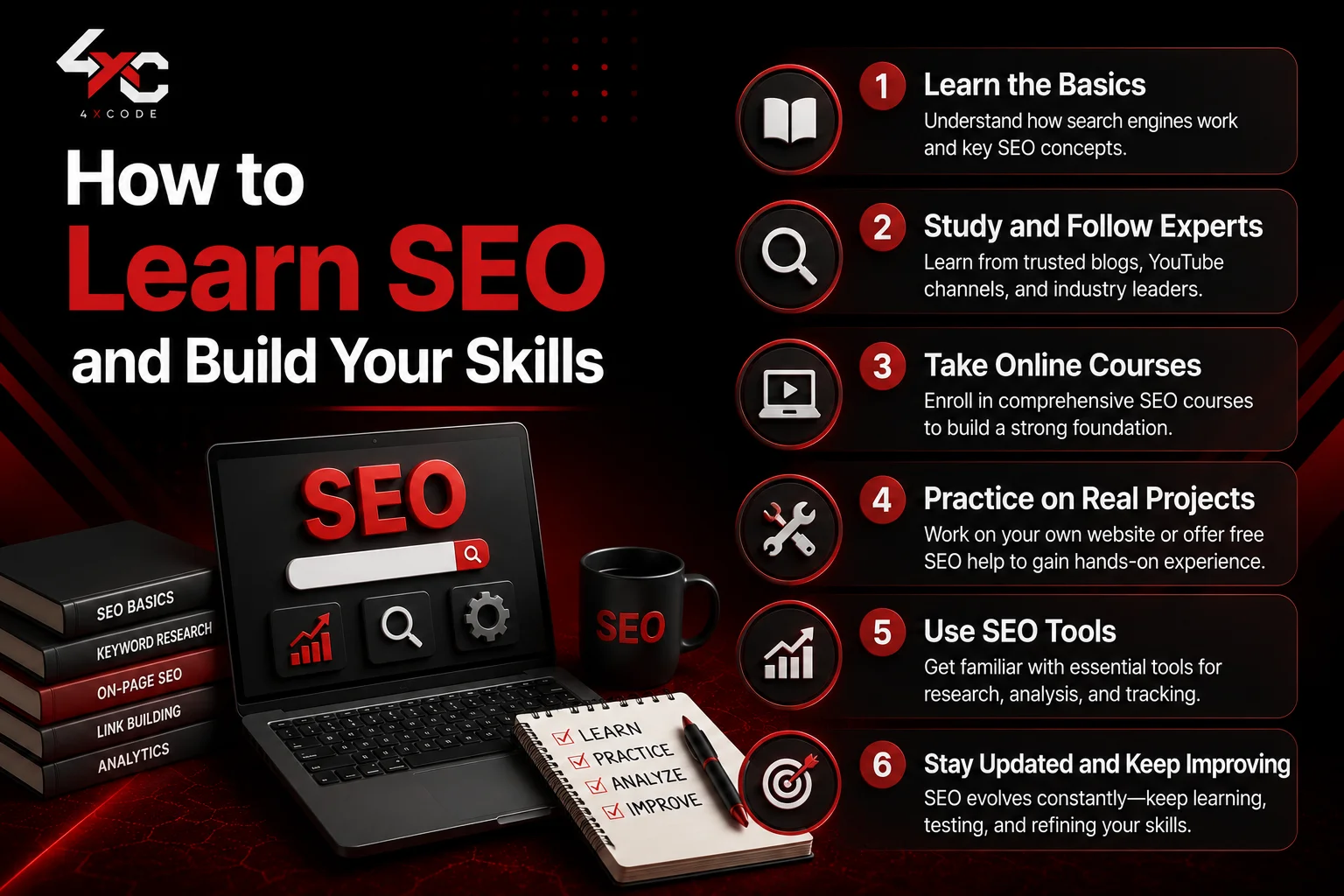
The good news for beginners: SEO is genuinely learnable, and you don't need a degree to start. The field rewards curiosity and consistency.
- Read the source. Google's own Search Essentials and Search Central documentation are the most authoritative starting points, straight from the people who run the algorithm.
- Learn the tools. Google Search Console is free and essential. Ahrefs, Semrush, Moz, and Screaming Frog cover keyword research, backlinks, and technical audits.
- Practice on a real site. Theory only sticks once you've watched your own changes move (or fail to move) the needle.
- Follow reputable voices. Industry publications and recognized practitioners keep you current as the landscape shifts.
The best SEOs blend disciplines: a bit of writing, a bit of analytics, a bit of technical understanding, and endless curiosity about why people search the way they do.
Common SEO Mistakes to Avoid
A quick gut-check. If you're doing any of these, fix them first:
- Chasing keywords, ignoring intent. Ranking for a term nobody buys from is a vanity metric.
- Keyword stuffing. Cramming phrases unnaturally now hurts more than it helps.
- Neglecting technical health. Slow, uncrawlable sites cap your ceiling no matter how good your content is.
- Buying cheap backlinks. A fast track to penalties, not rankings.
- Publishing thin content. "More pages" isn't a strategy. Better pages is.
- Treating SEO as one-and-done. Set-and-forget is how rankings quietly decay.
Frequently Asked Questions
What does SEO stand for?
SEO stands for Search Engine Optimization, the practice of improving a website to rank higher in organic search results on engines like Google and Bing.
What is SEO in simple words?
It's the work you do to help search engines find, understand, and trust your website, so the right people discover you when they search, without you paying for each click.
Is SEO free?
The traffic is free in the sense that you don't pay per click. But SEO costs time, effort, and often investment in content and a well-built site. It's earned, not bought.
Does SEO still work in 2026?
Yes, more than ever, but the bar has risen. With AI Overviews and generative search, helpful, authoritative, technically sound content is rewarded, and shortcuts are penalized.
How long does SEO take to work?
Usually three to six months for meaningful results, and longer for competitive terms. It's a compounding investment, not an instant switch.
Can I do SEO myself?
Absolutely, especially the fundamentals. Many small businesses handle their own on-page and content work. Technical SEO and competitive markets are where expert help tends to pay off.
What's the difference between SEO and digital marketing?
SEO is one channel within digital marketing, the one focused on earning organic search visibility. Digital marketing also includes paid ads, email, social, and more.
What is SEO used for in business?
To attract qualified customers at the moment they're searching, reduce reliance on paid ads, build credibility, and create a traffic source that compounds over time.
The Bottom Line
SEO isn't magic, and it isn't a trick. It's the discipline of deserving to be found, by building a website that search engines can read, trust, and recommend, filled with content that genuinely answers what people are searching for. Crawling, rendering, indexing, ranking; on-page, off-page, technical; intent, authority, and now AI-powered discovery, it all comes back to one idea: be the best, most accessible answer to a real question.
And in 2026, that increasingly starts with how your site is engineered. The fastest content strategy in the world still loses on a slow, broken foundation.
If you're building, or rebuilding, a website, SaaS platform, or product and you want search performance designed in from the first line of code rather than patched on later, that's exactly what we do at 4xCode.