

Picture this: it's the end of the month, and your finance team is still chasing down three suppliers who haven't sent their invoices yet. One arrived by post and sat in a tray for four days before anyone opened it. Another was emailed as a scanned PDF that someone now has to manually key into the accounting system. Sound familiar?
If you're nodding along, you're not alone. Thousands of UK businesses are quietly bleeding time, money, and accuracy through invoicing processes that haven't fundamentally changed in decades. Meanwhile, HMRC's push toward digital tax reporting and the EU's growing PEPPOL mandates are making the old way of doing things harder to justify.
This guide breaks down exactly how e-invoicing and traditional invoicing compare, the real costs, the compliance implications, the security risks, and the practical steps to switch, so you can make a decision based on facts, not guesswork.
What Is Traditional Invoicing and Why Are Businesses Moving Away From It?
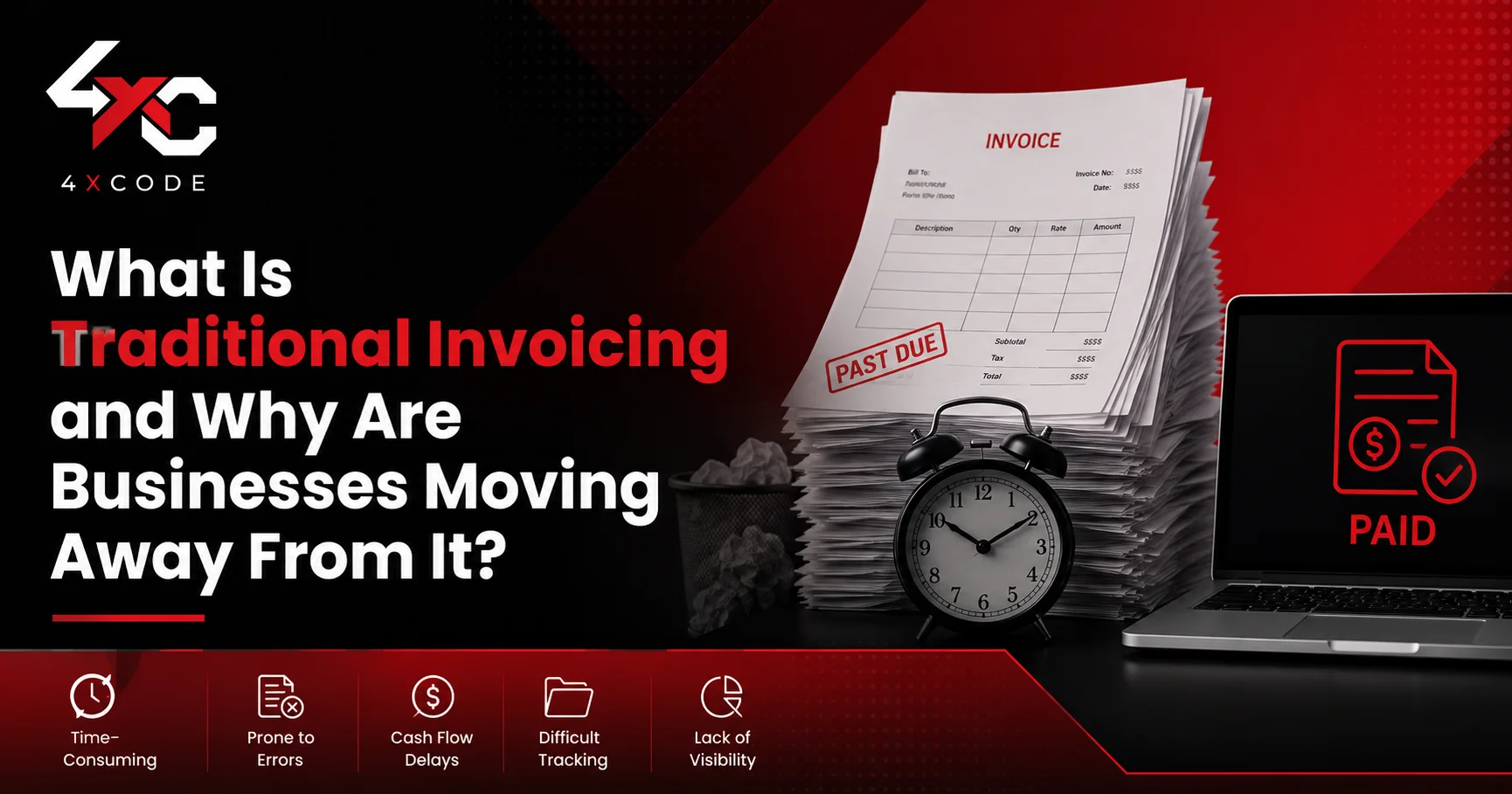
Traditional invoicing is the paper-based or manually-created digital invoice process most businesses grew up with. It typically involves a person creating an invoice, either handwritten, typed into a Word document, or generated in basic accounting software, then printing, posting, or emailing it as a PDF attachment to the buyer.
From there, someone on the receiving end has to open it, read it, key the data into their accounting system, match it against a purchase order, and route it for approval. Every single one of those steps is a chance for something to go wrong.
What Does Traditional Invoicing Actually Involve?
A typical manual invoice lifecycle looks like this:
- Invoice creation: a finance team member manually drafts the invoice, often copying data from a spreadsheet or previous template
- Delivery: the invoice is posted, faxed (yes, still happening in some sectors), or emailed as an unstructured PDF
- Manual data entry: the recipient re-types the invoice details into their own accounting or ERP system
- Manual approval routing: the invoice is passed between departments, often via email chains, for sign-off
- Filing and archiving: physical copies get stored in filing cabinets, or digital copies sit scattered across shared drives
Each handoff point introduces delay and risk. There's no structured data, no automatic validation, and no real-time visibility into where an invoice is stuck.
What Are the Main Disadvantages of Manual Invoicing?
The problems with traditional invoicing aren't just inconvenience, they have measurable financial impact.
Slower payment cycles. Invoices sitting in inboxes or postal trays delay the entire accounts payable process, which directly affects your accounts receivable and cash flow.
Higher error rates. Manual data entry is one of the leading causes of invoice mismatches, duplicate payments, and disputes with suppliers.
Limited audit trail. Paper invoices and scattered email threads make it genuinely difficult to prove compliance during a tax audit or reconstruct an invoice's history.
No real-time reporting. You simply can't get accurate, up-to-date visibility into outstanding invoices, cash flow forecasts, or supplier performance when your data lives in filing cabinets and inboxes.
Why Do Paper Invoices Lead to Payment Delays?
Every manual step, printing, posting, opening, re-keying, adds days to the invoice processing timeline. A paper invoice can easily take one to two weeks longer to clear approval than a structured electronic invoice, simply because it depends on people physically handling documents rather than data flowing automatically between systems.
How Much Does Manual Invoice Processing Really Cost a Business?
Industry benchmarks commonly cite the cost of processing a single manual invoice at several pounds once you factor in staff time, printing, postage, and error correction, compared to a fraction of that cost for a properly automated electronic invoice. For a business processing hundreds or thousands of invoices a month, that difference adds up to a significant, recurring drain on operational budget.
Is Traditional Invoicing Still Compliant with HMRC and UK Tax Rules?
Yes, traditional invoicing remains legally valid in the UK, for now. However, the direction of travel is clear. HMRC's Making Tax Digital initiative already requires VAT-registered businesses to keep digital records and submit returns through compatible software, and the UK government has been actively consulting on wider e-invoicing adoption, partly to align with international trends and reduce the VAT gap. Businesses trading with EU partners are also increasingly encountering PEPPOL-based e-invoicing requirements, even if UK domestic rules haven't yet mandated it outright.
What Is E-Invoicing and How Does It Work?
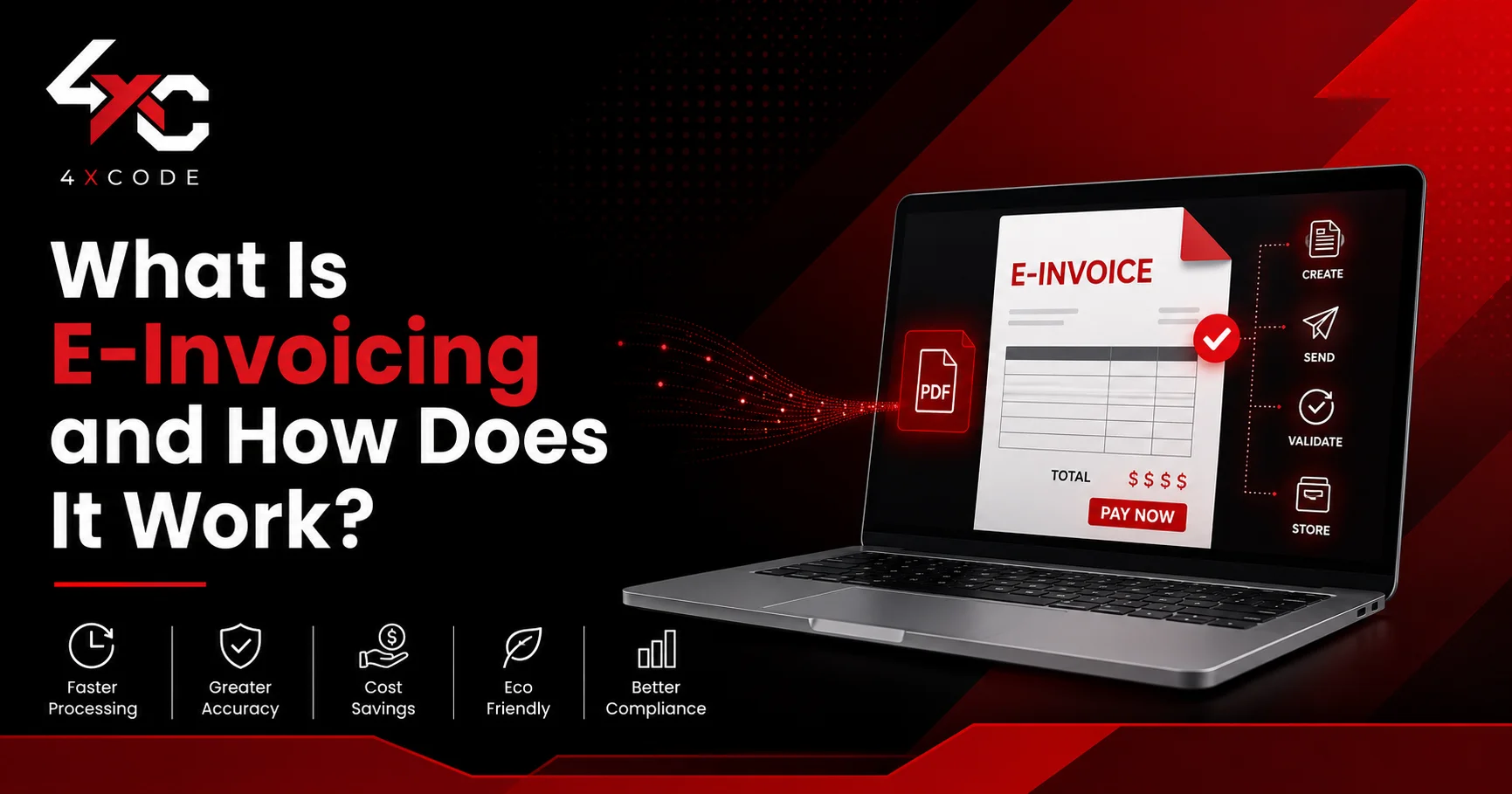
E-invoicing, or electronic invoicing, isn't just "emailing a PDF instead of posting paper." That's a common misconception. True e-invoicing means structured, machine-readable invoice data, typically in XML format, that flows directly between the supplier's and buyer's systems without manual re-entry.
Think of it as the difference between sending someone a photo of a form versus sending them the actual data that populates that form automatically in their own system.
How Does an Electronic Invoice Move From Supplier to Buyer?
In a proper e-invoicing setup, the process looks like this:
- The supplier's system generates a structured invoice (usually XML) directly from their ERP or accounting software
- The invoice is transmitted electronically through a secure network often via PEPPOL, EDI, or a dedicated e-invoicing platform
- The buyer's system receives the invoice and automatically validates it against the purchase order (this is called PO matching, or three-way matching when goods receipt is included)
- The invoice flows into an automated approval workflow, often without any human touching the data at all
- Once approved, it's archived automatically with a full digital audit trail
What Role Do PEPPOL, XML, and PDF Formats Play in E-Invoicing?
PEPPOL (Pan-European Public Procurement Online) is a network and set of standards that allows businesses across different countries and systems to exchange structured electronic documents securely it's become the backbone of much of Europe's e-invoicing infrastructure.
XML is the structured data format that makes true e-invoicing possible it's machine-readable, which means software can extract and validate the data instantly without human interpretation.
PDF, by contrast, is technically a digital file, but it's unstructured. A computer can display a PDF invoice, but it can't automatically read and process the data inside it the way it can with XML which is why PDF invoices still usually require manual or OCR-based data entry.
What Technology Powers Modern E-Invoicing? (OCR, AI & ERP Integration)
Modern e-invoicing platforms combine several technologies to remove manual work almost entirely:
- ERP integration connects invoicing directly to systems like SAP, Oracle, Microsoft Dynamics 365, NetSuite, Xero, or QuickBooks, so data flows in one continuous chain
- OCR (Optical Character Recognition) technology reads and digitizes any remaining unstructured documents, converting scanned or PDF invoices into usable data
- Invoice extraction technology identifies key fields, supplier name, invoice number, VAT amount, line items, and populates them automatically, dramatically cutting down on manual entry and the errors that come with it
How Does AI-Powered Invoice Extraction Reduce Errors?
Rather than relying on someone manually typing numbers from a scanned document, modern invoice extraction tools can identify and cross-check fields like VAT amounts, totals, and supplier details against expected values in real time. This kind of intelligent validation flags mismatches, like a total that doesn't add up, or a VAT number that doesn't match records, before the invoice ever reaches an approver, which significantly reduces both processing errors and exposure to invoice fraud.
Is E-Invoicing Mandatory in the UK and EU?
E-invoicing is already mandatory in several EU member states for business-to-government (B2G) transactions, and a growing number are extending mandates to business-to-business (B2B) trade as well. In the UK, e-invoicing isn't currently mandatory for most private-sector transactions, but government procurement increasingly expects electronic invoicing, and UK businesses trading cross-border with EU partners are being pulled into PEPPOL-based requirements regardless of domestic UK law. Given the pace of digital tax transformation across Europe, most compliance advisors now recommend treating e-invoicing readiness as a "when," not an "if."
E-Invoicing vs. Traditional Invoicing: A Side-by-Side Comparison
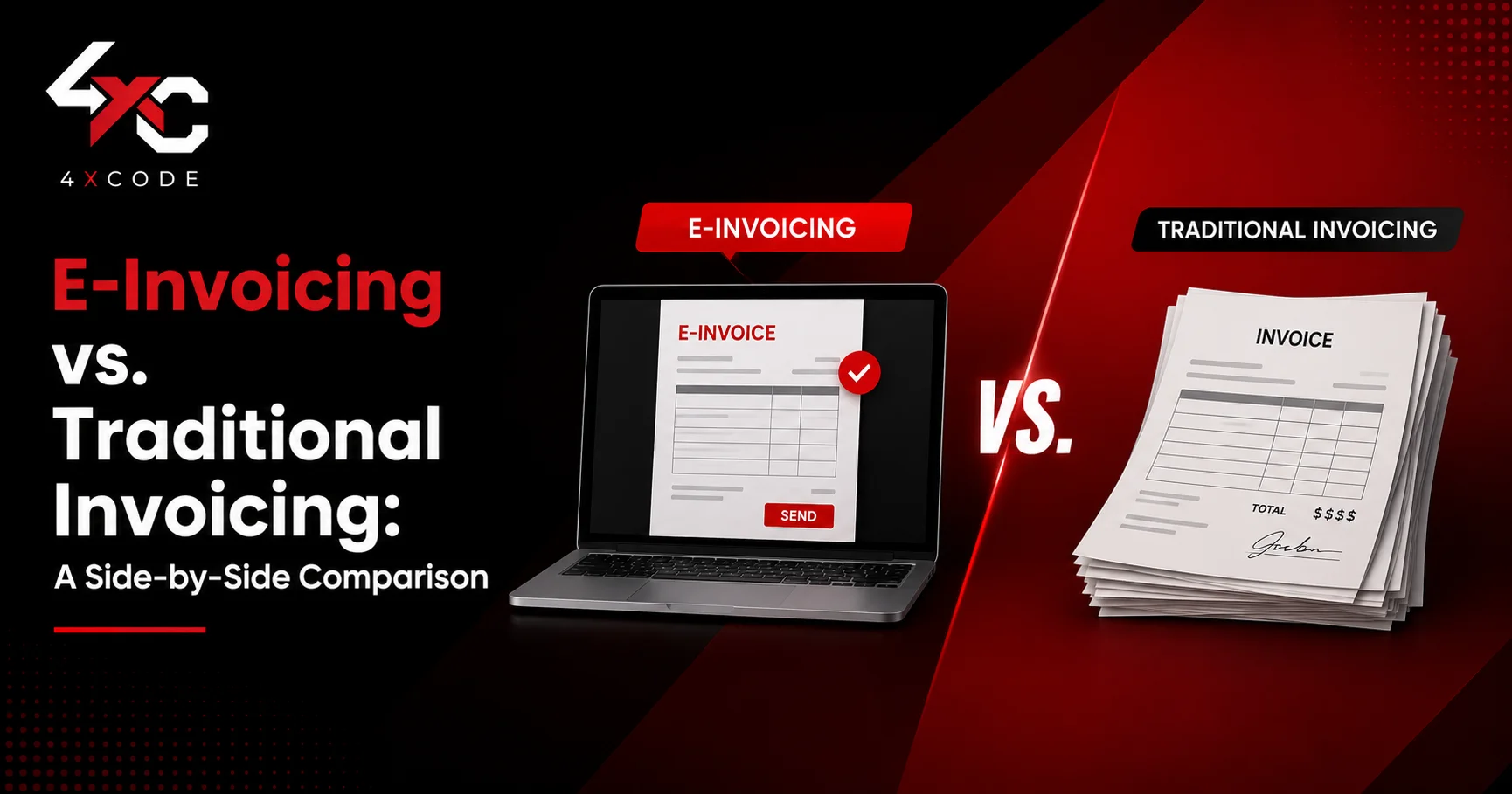
Here's where the two approaches really diverge. Below is a direct comparison across the factors that matter most to finance and operations teams.
Factor | Traditional Invoicing | E-Invoicing |
| Processing speed | Days to weeks | Minutes to hours |
| Data entry | Manual, error-prone | Automated, structured |
| Cost per invoice | Higher (labour, printing, postage) | Significantly lower at scale |
| Fraud detection | Limited, reactive | Real-time validation and flagging |
| Compliance/audit trail | Fragmented, hard to reconstruct | Automatic, complete digital trail |
| Cross-border capability | Complex, currency/format issues | Standardized via PEPPOL/XML |
| Scalability | Requires proportional headcount | Scales without added staff |
Speed and Payment Cycles; Which Method Gets You Paid Faster?
E-invoicing consistently wins here. Because structured data moves directly between systems without manual handling, invoices reach the approval stage far faster. For a business relying on healthy cash flow, that speed difference between traditional invoicing and e-invoicing can be the difference between meeting payroll comfortably and scrambling for short-term financing.
Cost Comparison; Is E-Invoicing Actually Cheaper Than Paper Invoicing?
It's a fair question, especially since e-invoicing platforms come with upfront setup and subscription costs. But the maths tends to favor e-invoicing once volume increases. Manual invoicing costs scale linearly with volume, more invoices means more staff hours, more printing, more errors to correct. E-invoicing costs largely flatten after implementation, since the same system can process ten invoices or ten thousand without a proportional increase in labour cost.
Accuracy and Fraud Prevention; Which Method Is More Secure?
Traditional invoicing relies heavily on human vigilance to catch errors and fraud, and humans, understandably, miss things, especially under deadline pressure. E-invoicing platforms apply consistent, automated validation rules to every single invoice: checking VAT numbers, flagging duplicate invoice numbers, cross-referencing supplier bank details against known records, and catching anomalies that could indicate fraudulent activity. This kind of consistent scrutiny is difficult to replicate manually, particularly for businesses processing high invoice volumes.
Compliance and Audit Readiness; Which Method Simplifies Tax Reporting?
E-invoicing creates a complete, timestamped digital record of every transaction by default, exactly what's needed for VAT compliance, GST reporting, and Making Tax Digital requirements. Traditional invoicing can technically meet compliance requirements too, but reconstructing a clean audit trail from scattered emails, printed copies, and spreadsheets is far more labour-intensive and prone to gaps.
Scalability; Which Method Supports Business and Cross-Border Growth?
If your business is expanding into new markets or increasing transaction volume, traditional invoicing becomes a genuine bottleneck. Manual processes that "just about work" at 50 invoices a month often collapse under the weight of 500. E-invoicing, particularly when built on standards like PEPPOL, is designed to scale, and it simplifies cross-border invoicing by standardizing formats and currencies in a way manual processes simply can't match.
Why UK Businesses Are Switching to E-Invoicing (And How to Make the Move)
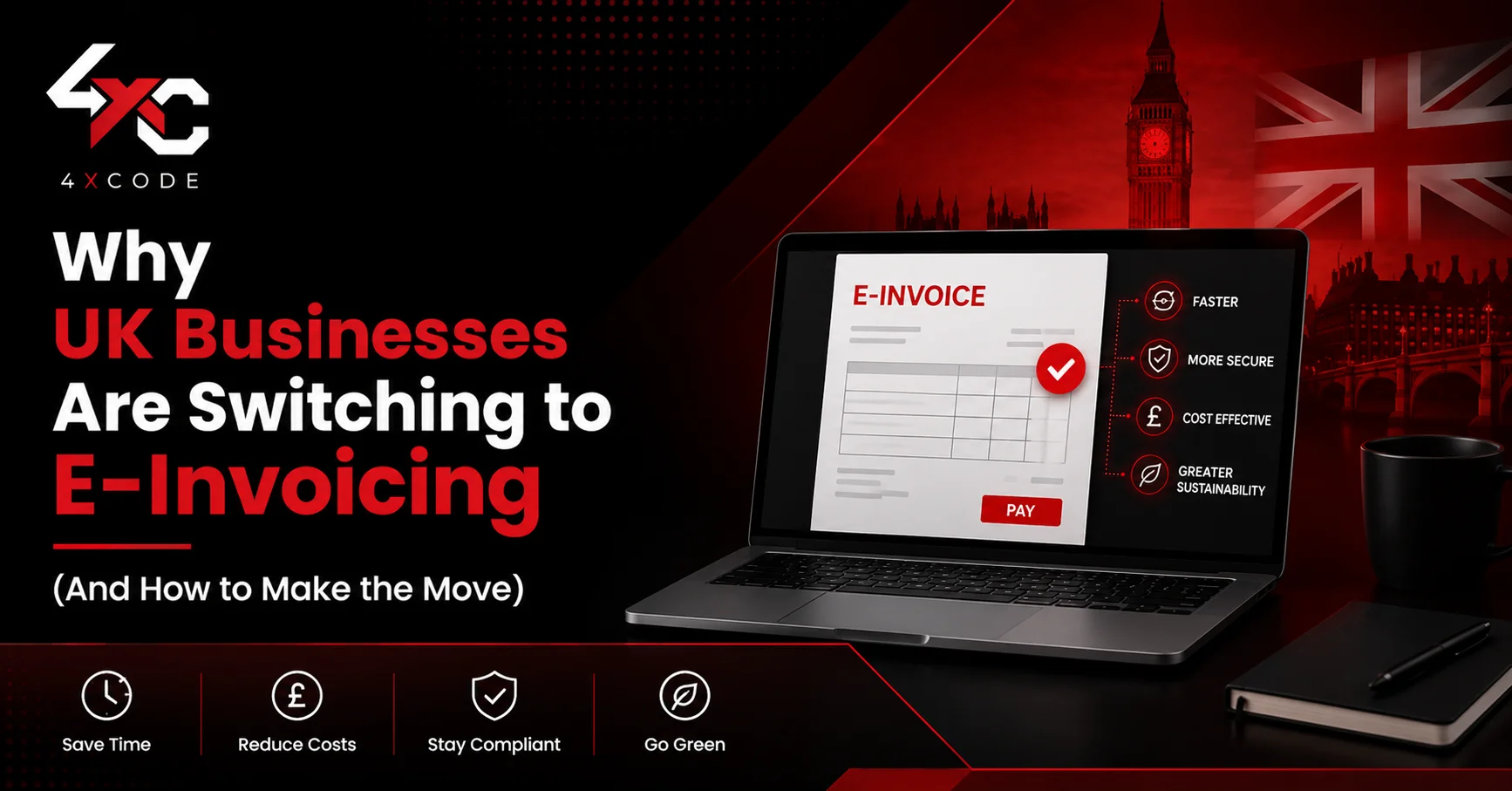
The shift toward e-invoicing isn't just a compliance trend, it's a practical response to rising costs, tighter margins, and the operational strain of manual finance processes.
What Are the Biggest Benefits of Switching to E-Invoicing?
Businesses that make the switch typically report:
- Faster payment cycles, improving overall cash flow and reducing reliance on short-term credit
- Lower processing costs, freeing up finance teams to focus on higher-value work rather than data entry
- Reduced invoice disputes, thanks to automated PO matching and validation
- Stronger fraud prevention, through consistent, automated checks on every invoice
- Better supplier relationships, since suppliers get paid faster and with fewer errors
- Real-time financial visibility, with dashboards showing exactly where every invoice stands
- Simplified tax compliance, with a complete, easily retrievable audit trail
These aren't abstract benefits, they translate directly into fewer late-payment penalties, better supplier terms, and more accurate financial forecasting.
How Do You Migrate From Manual to Electronic Invoicing Without Disruption?
Switching invoicing systems can feel daunting, especially for businesses with established supplier relationships and internal processes built around the old way of doing things. The key is a phased approach rather than a sudden switch-over.
What Does a Typical E-Invoicing Implementation Roadmap Look Like?
A sensible migration usually follows these stages:
- Audit your current invoicing volume and pain points, identify where delays, errors, and costs are concentrated
- Choose a platform that integrates with your existing ERP or accounting software, disruption is minimized when e-invoicing plugs into systems you already use
- Run a pilot with a small group of suppliers or customers, before rolling out company-wide
- Train your finance team on the new workflow, focusing on exception-handling rather than manual data entry
- Expand gradually, bringing more trading partners onto the electronic system over a defined period
- Monitor and refine, using real-time reporting to identify any remaining bottlenecks
How Long Does It Take to See ROI After Switching?
Most businesses begin seeing measurable returns, in the form of reduced processing time and fewer errors, within the first two to three months of going live, with fuller cost savings typically materializing as more suppliers and invoice volume move onto the electronic system over six to twelve months. The exact timeline depends heavily on invoice volume and how quickly trading partners are onboarded.
Which Invoicing Method Should Your Business Choose in 2026?
If your business processes a low volume of invoices, has minimal cross-border trade, and isn't under pressure from compliance mandates, traditional invoicing might still be manageable in the short term, though it's worth watching how quickly that calculus changes as digital tax reporting expands.
For most growing UK businesses, however, particularly those trading with EU partners, processing meaningful invoice volume, or looking to tighten cash flow and reduce fraud risk, e-invoicing is no longer a "nice to have." It's becoming the practical, defensible choice, and the businesses that adopt it early tend to face a much smoother transition than those forced into it by regulation later.
Frequently Asked Questions
Is e-invoicing more expensive to implement than traditional invoicing?
There's typically an upfront cost to set up an e-invoicing platform and integrate it with your existing systems. However, when you factor in the ongoing costs of manual invoicing, staff time, printing, postage, and error correction, most businesses find e-invoicing becomes more cost-effective within the first year, especially as invoice volume grows.
Can small businesses benefit from e-invoicing?
Yes. While large enterprises with high invoice volumes see the most dramatic cost savings, small businesses benefit too, particularly through faster payment cycles, fewer disputes with suppliers, and simplified VAT compliance. Many e-invoicing platforms now offer scaled pricing specifically designed for smaller invoice volumes.
Is e-invoicing legally required for UK businesses?
Not universally, at least not yet. E-invoicing isn't currently mandatory for most UK private-sector B2B transactions, though government procurement increasingly expects it, and businesses trading with EU partners are often required to comply with PEPPOL-based e-invoicing standards regardless of UK domestic rules.
How secure is electronic invoicing compared to paper invoices?
Generally, more secure. E-invoicing platforms apply automated validation checks, verifying VAT numbers, flagging duplicate invoices, and cross-referencing supplier details, that are difficult to replicate consistently through manual review. That said, security ultimately depends on the platform and processes a business puts in place.
Does e-invoicing work with existing ERP systems like SAP, Oracle, or QuickBooks?
Yes. Most reputable e-invoicing platforms are built to integrate directly with common ERP and accounting systems, including SAP, Oracle, Microsoft Dynamics 365, NetSuite, Xero, and QuickBooks, allowing structured invoice data to flow automatically without manual re-entry.
The Bottom Line
Traditional invoicing isn't disappearing overnight, but the gap between it and e-invoicing is widening every year, in cost, speed, accuracy, and compliance readiness. Businesses that keep relying on manual processes aren't just accepting slower payments; they're absorbing hidden costs in errors, disputes, and missed fraud that compound over time.
The businesses gaining the real advantage right now are the ones treating e-invoicing not as a future obligation, but as a current operational upgrade, one that pays for itself through faster cash flow, cleaner compliance, and fewer hours lost to manual data entry.
If you're weighing up whether your business is ready to make that move, 4xcode can help you assess your current invoicing setup, map out a migration plan that fits your existing systems, and get you trading electronically without disrupting the relationships you've already built with suppliers and customers. Get in touch to talk through what switching would actually look like for your business.